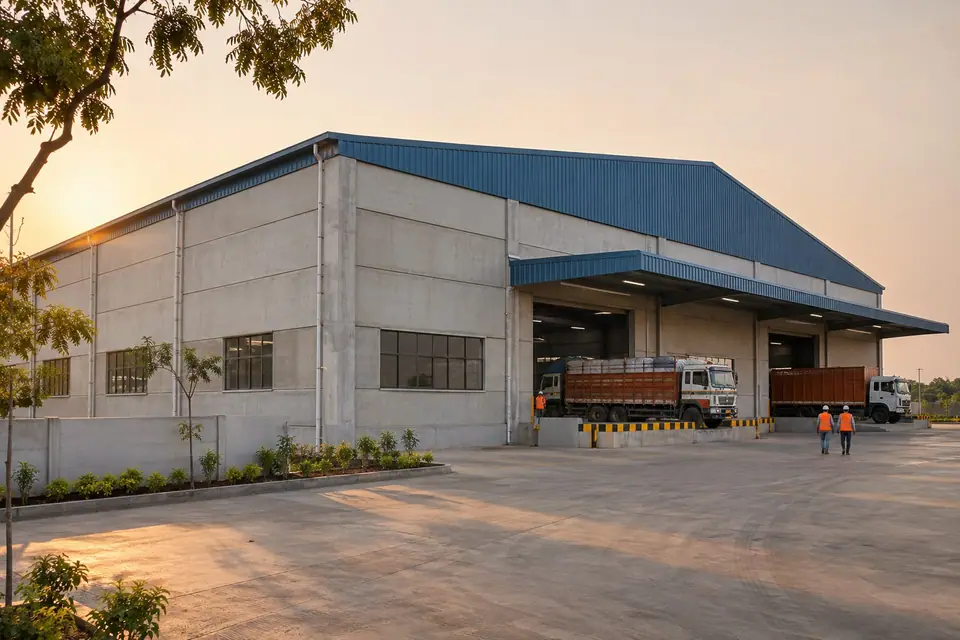
A finished precast factory at golden hour, fair-faced concrete walls and a steel-blue roof, trucks at the dock

Home / Why Precast

Factories are no longer
built on site.

They are made in a plant and assembled on the plot. This is why the method is changing, and why it pays to change with it.

Illustrative render

01 · The shift

Every industry moved its work into a factory. Construction is next.

Cars and machines are made in a plant, then delivered. A factory building can be made the same way.

  1. Made in the plantSteel moulds, controlled curing, every element checked.
  2. Delivered finishedElements arrive ready to place. Nothing cast on site.
  3. Assembled on siteA crane and a small crew put it together.
  4. All at the same timeThe plant casts while your site is prepared.
Already built in precast in India
  • Metro viaducts
  • Highway culverts
  • Warehouse parks
Factory buildings are next.

02 · Time

The difference is not speed. It is doing the work in parallel.

On site, every step waits for the one before it. With precast, the plant and the site work at the same time.

Built on site, step by step

  1. Footings
  2. Frame: shuttering, steel, curing
  3. Brickwork
  4. Plaster
  5. Paint
  6. Production starts

Precast, in parallel

  1. Design and shop drawings
  2. Site work and foundations
  3. Casting in the plant
  4. Erection by crane
  5. Production starts

Illustrative sequence, not to scale. The structure and walls typically go up 3–5× faster. Your programme comes with the quote.

Your project

What is an earlier start worth to you?

Enter your shed area and expected revenue. We estimate the time saved and what it is worth.

Built on site
Precast
You start production5 months earlierRevenue you would otherwise wait for₹ 2.5 crore

Indicative estimate for a single-storey factory shed, from typical programmes for each method. Your programme comes with the quote. Notes

03 · What changes for you

Five differences you can measure.

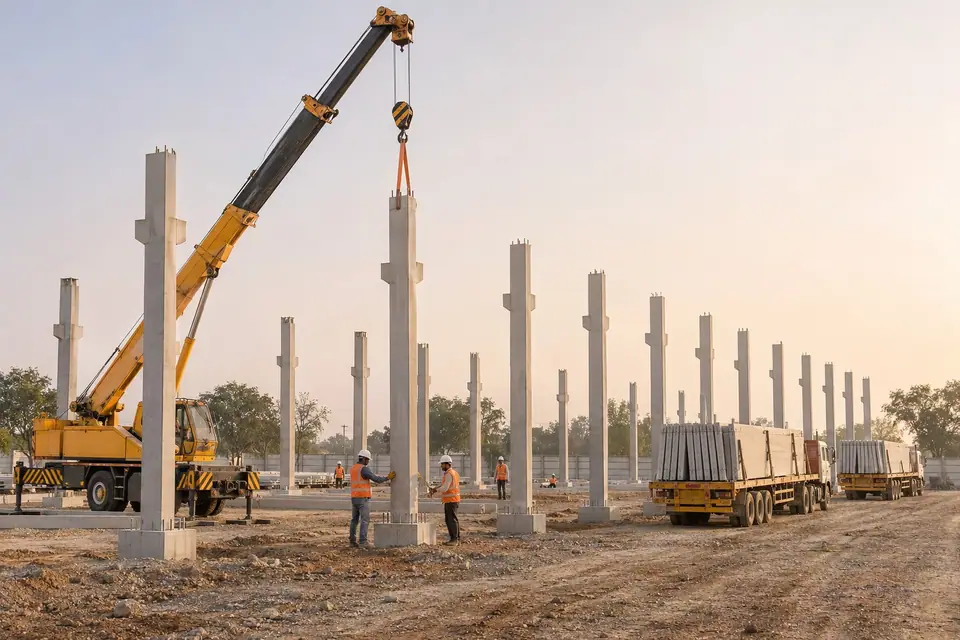
A precast frame going up on a factory site, a column being lowered into its socket while panels wait on trailers
01 / 05

Faster to build.

3–5×faster, structure and walls

Casting starts the day drawings are approved, while your site is still being levelled. On site, elements are placed and fixed, not built. No shuttering to erect, no concrete to cure, no wall to wait for.

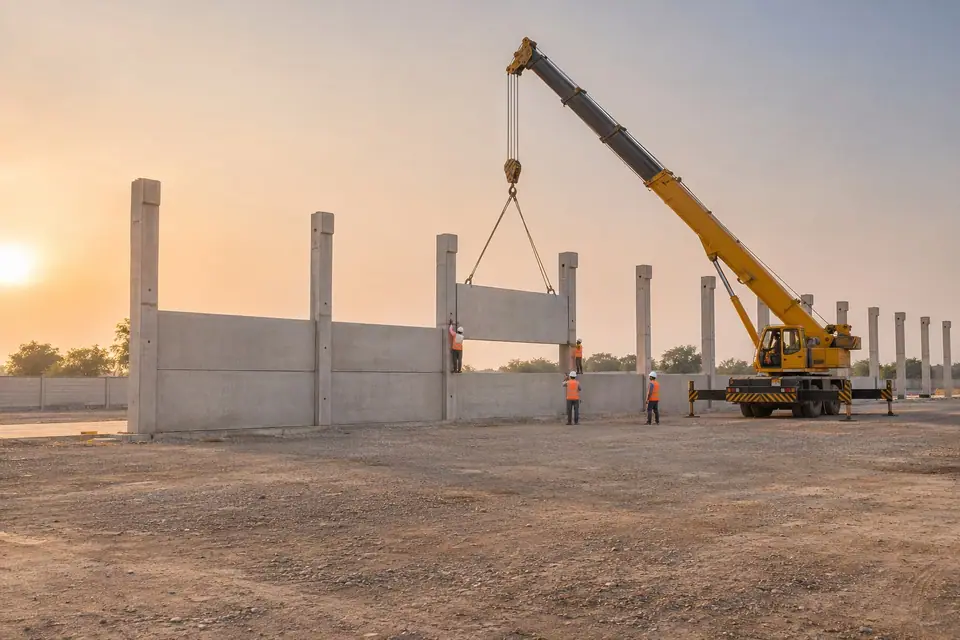
A nearly empty factory site with one crane and a small crew erecting precast elements
02 / 05

Half the people on site.

50%less labour on site

A crane, an operator and a small crew replace the gangs of shuttering carpenters, masons and plasterers. Fewer people means fewer delays when labour is short, a safer site and less to manage.

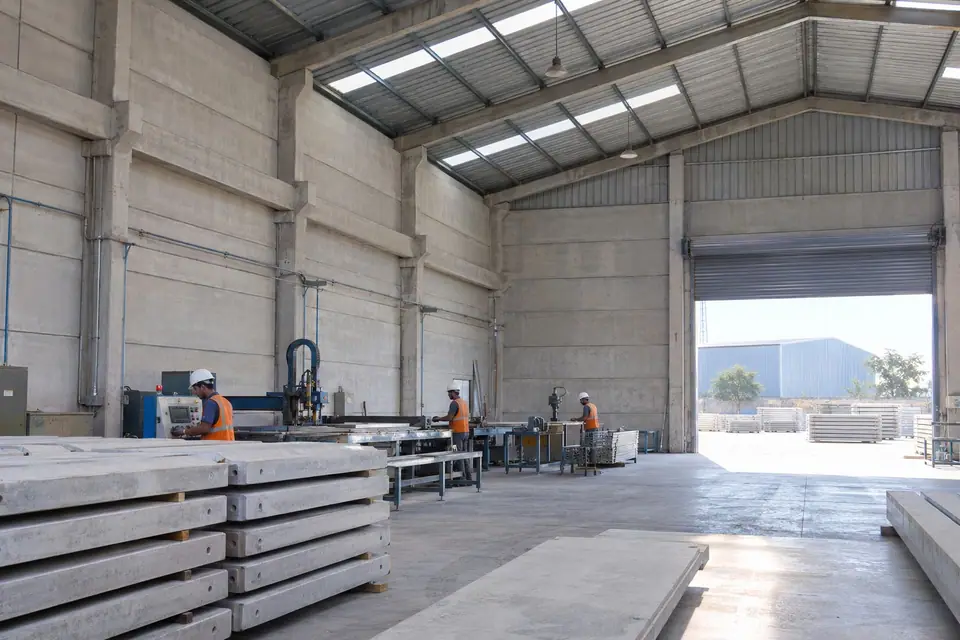
Inside a precast factory at noon, workers at machines in shade while harsh sun falls outside the loading dock
03 / 05

Cooler than a PEB shed.

50–65%smaller heat swing inside

A steel sheet passes the sun’s heat straight through. A 150 mm concrete panel absorbs it and releases it slowly, so the afternoon peak reaches the inside hours later and weaker. Your workers and machines feel the difference.

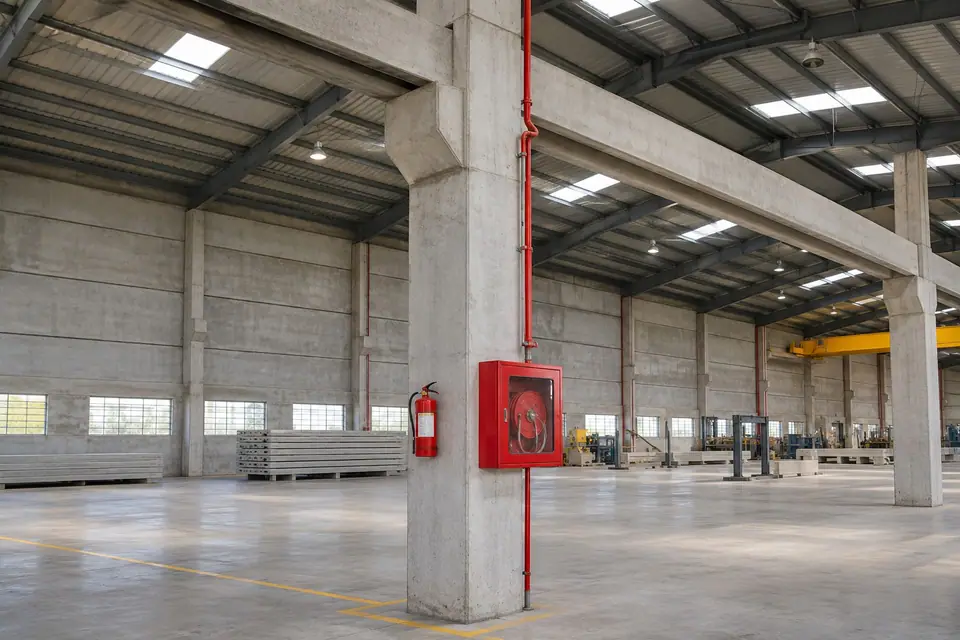
A bare precast concrete column and beam inside a factory, beside a fire hose cabinet
04 / 05

Safer in a fire.

0fire coatings to maintain

Steel loses much of its strength in a fire and needs a protective coating that must be kept intact. Concrete does not burn, and its cover protects the steel inside.

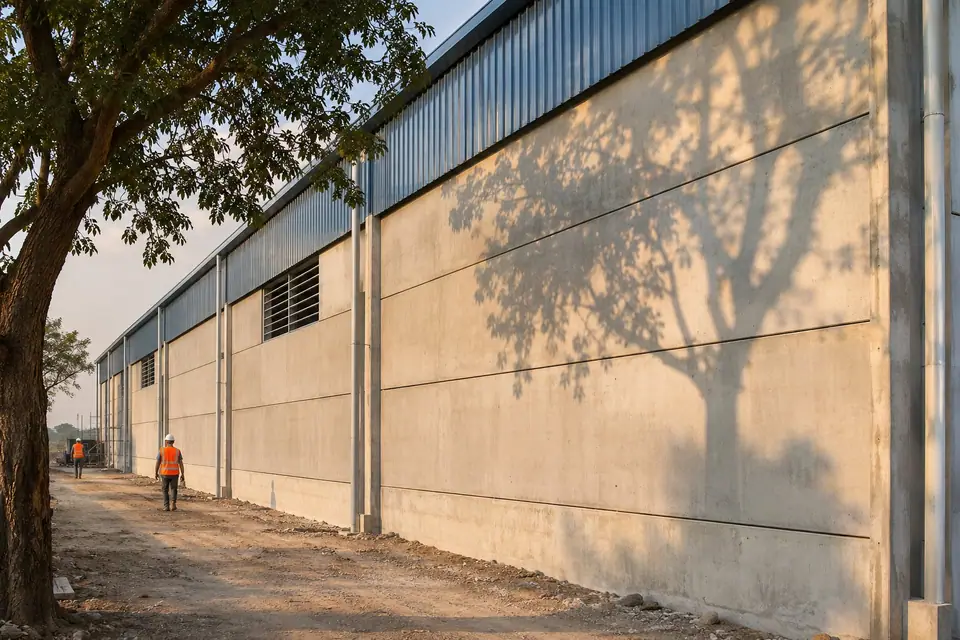
Close-up of a long fair-faced precast wall in low sun, crisp joints, no plaster or paint
05 / 05

No plaster. No paint.

0finishing trades on site

Panels come out of steel moulds with a smooth, fair-faced surface. There is no plaster to crack and no paint to renew every few years. Joints are sealed and leak-free.

Indicative figures. Illustrative renders. How we state figures

04 · Side by side

Precast against the other two methods.

An honest comparison, including where precast is not the easiest choice.

PrecastPEB shedRCC frame and brick
Time to production▲Fast, walls includedFast frame, walls separateSlow, one step after another
People on site▲Small crew and a crane▲Small crewLarge gangs
Heat inside▲Slow to heat upHot under the sun▲Slow to heat up
In a fire▲No coating neededNeeds fire coating▲No coating needed
Walls▲Fair-faced concreteSteel sheetBrick, plaster and paint
Security and impact▲Solid concreteThin sheetBrick
Upkeep▲MinimalRepainting, re-sheetingRepainting, plaster repairs
Changes laterPlan it at design stage▲Easy to modifyPossible, but slow

▲ Better in this row. General comparison of methods; your design and site decide the final figures.

05 · Questions we hear

The usual doubts, answered.

Is precast more expensive?

Per cubic metre, a precast element can cost more than concrete poured on site. But the job needs less time, fewer people and no finishing trades. Compare the whole job and the date you start production, not the rate per element. Our quote shows both.

Will the joints leak?

No. Joints are sealed and leak-free, and they are designed and checked as part of the structure.

Can I extend the building later?

Yes, if it is planned. Tell us at design stage and we lay out the end walls and foundations so new bays can be added.

Is it only for large projects?

Precast pays where elements repeat. Below a certain size, moulds, transport and a crane cost more than they save. We tell you at the first call if that is your case.

Who designs the structure?

We design the precast structure and share the design basis with your structural consultant for review before anything is cast.

What does my site need?

Access for trailers and room for a crane to work. We check both at the site visit.

Choose precast if you want

  • A faster buildingProduction starts months earlier.
  • A cooler buildingConcrete walls hold back the afternoon heat.
  • A low-maintenance buildingNo plaster, no paint, nothing to redo.
  • A fire-safe buildingConcrete does not burn and needs no coating.
  • A solid, secure buildingConcrete walls, not sheet.
  • A fixed handover dateMade in the plant, not at the mercy of the site.

Choose something else if

  • The building is small and one-off
  • The shape is highly irregular
  • A crane cannot reach the plot

Get a quote

Find out what precast does for your project.

Send your plot size, shed area and planned start. We reply with the system, a programme and a budget price.